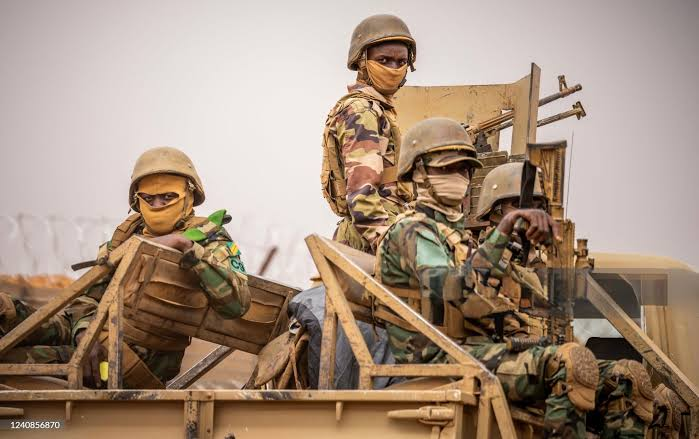
The Federal Government has disbursed N5.15tn in special intervention funds to the Nigerian military and other security agencies between November 2023 and September 2026, despite persistent cases of terrorism, banditry, kidnapping and other violent crimes across the country.
An analysis of documents from the Federation Account Allocation Committee (FAAC), obtained by The PUNCH, showed that the government received a total of N5.65tn into a dedicated special intervention account within the period, out of which N5.15tn, representing 91.15 per cent, had been released.
The funds were sourced from the Federation Account and other government revenue streams, including non-oil revenue and transfers from a FAAC withholding account.
The document, titled Ledger of Special Intervention Programme for Nigerian Military September, 2026, was prepared by the Federation Account Department of the Office of the Accountant-General of the Federation. It formed part of the documents presented to the Technical Sub-Committee of FAAC at its meeting in Abuja on October 14, 2026.
According to the ledger, the N5.15tn was disbursed through 30 payment transactions between November 8, 2023, and September 23, 2026, while 33 transactions accounted for the total funds received.
The special intervention payments were separate from the regular annual budgetary allocations to the Ministry of Defence and other security institutions, highlighting the additional financial resources committed to security operations.
However, the document did not provide details of the specific military operations, equipment purchases, personnel expenses or security projects funded through the intervention programme.
A breakdown of the transactions showed that the programme began with a N100bn transfer on October 19, 2023, representing the September 2023 allocation.
The first N100bn disbursement to the military was recorded on November 8, 2023, followed by another N100bn transfer on November 20, which was paid out on December 20.
By the end of December 2023, the intervention account had received and disbursed N300bn, leaving no outstanding balance.
The funding arrangement continued throughout 2024, with monthly transfers of N100bn and corresponding payments to military and paramilitary agencies.
Between January and December 2024, the account received N1.2tn and disbursed the same amount, bringing cumulative receipts and payments to N1.5tn.
Although the transactions were largely recorded as monthly allocations, the dates of some transfers and payments did not correspond with the months for which the funds were designated.
For instance, the January 2024 allocation was transferred on February 27, while the corresponding payment was made on March 1.
The programme entered another phase in July 2024, beginning with a N100bn transfer on July 27, with the N100bn monthly funding pattern continuing into 2025.
During the first nine months of 2025, the account received and disbursed N900bn, bringing cumulative payments to N2.4tn as of September 1, 2025.
The scale of the intervention increased significantly in 2026, when individual transfers rose from the previous N100bn monthly pattern to between N200bn and N500bn.
On March 18, 2026, the Federal Government transferred N200bn from the FAAC Withheld Account, described in the ledger as savings for March.
This was preceded by a N100bn payment to security agencies on March 16.
Another N250bn was transferred from non-oil revenue on May 18, while N130bn was paid to security agencies from the FAAC Withheld Account on May 25.
The ledger also recorded a N120bn payment to the Consolidated Pool Account II Treasury Single Account (TSA) on June 3. Unlike the other transactions, the entry did not expressly identify military or paramilitary agencies as the beneficiaries.
On June 16, the government initially transferred N400bn from non-oil revenue for May but reversed the transaction the same day. It subsequently recorded a fresh N500bn transfer from the same revenue source.
The same day, N500bn was disbursed to military and paramilitary agencies, representing one of the largest single payments under the programme.
The funding pattern continued in July, when another N500bn was transferred from non-oil revenue on July 15 and paid to security agencies on July 22.
In August, a further N500bn was transferred and disbursed on August 19.
On September 16, the government recorded another N500bn transfer from non-oil revenue, with the corresponding payment made on September 23.
The final entry showed an additional N500bn transfer from non-oil revenue on October 14, described as the September 2026 allocation.
Although the ledger was titled September 2026, the October 14 transaction indicated that its financial position incorporated the latest transfer presented at the FAAC technical meeting.
Overall, the intervention account received N3.25tn in 2026 as of October 14, compared with N1.2tn throughout 2024, representing an increase of approximately 170.83 per cent.
Payments in 2026 stood at N2.75tn, compared with N1.2tn in 2024, representing a 129.17 per cent increase.
The N2.75tn disbursed in 2026 also accounted for 53.40 per cent of the total N5.15tn released since the programme began.
The figures further showed that disbursements in 2026 exceeded the combined N2.4tn released between November 2023 and September 2025.
Meanwhile, the intervention account had an outstanding balance of N500bn as of October 14, representing 8.85 per cent of the total N5.65tn received.
The balance followed the latest N500bn transfer, which had no corresponding disbursement in the ledger as of the reporting date.
The development comes amid continuing security challenges across several parts of the country.
In the North-East, military operations against Boko Haram and the Islamic State West Africa Province (ISWAP) have continued, while banditry and mass kidnappings remain major concerns in parts of the North-West and North-Central regions.
Several communities have also suffered attacks by armed groups, resulting in deaths, displacement and disruption of farming and other economic activities.
The persistent insecurity has continued to put pressure on government finances, with substantial resources directed towards military operations, intelligence gathering, logistics and the protection of vulnerable communities.
FG Moves to Review National Security Strategy
In a related development, the Federal Government has commenced a review of the 2019 National Security Strategy to develop a new framework addressing emerging threats, including terrorism, banditry, kidnapping, cybercrime, food insecurity and climate change.
The National Security Adviser, Nuhu Ribadu, disclosed this on Thursday during the inauguration of a committee tasked with reviewing the existing framework and developing the National Security Strategy 2026.
Ribadu, who was represented by retired Major General Sarkin Bello, said Nigeria's security environment had changed considerably since the last review in 2019, making a comprehensive reassessment of the country's security priorities necessary.
“Our national security landscape is undergoing rapid and profound transformations. Since the last review of our strategy in 2019, the domestic, regional and global security environments have changed dramatically, with intensity,” he said.
He noted that Nigeria was confronted with multiple security threats requiring a broader and more coordinated response.
“As you are aware, these problems range from terrorism, banditry and kidnapping to sophisticated cyber threats, misinformation, economic problems, food insecurity and environmental challenges, among others,” Ribadu stated.
According to him, the proposed strategy will provide a framework for coordinating national security, resilience and sustainable development, while reflecting present realities and anticipating emerging threats.
Also speaking, the Deputy Chairman of the committee, retired Major General Evi Onumajuru, said the changing nature of security threats had made a strategic realignment imperative.
He explained that conventional threats such as terrorism, insurgency and banditry were increasingly interconnected with non-kinetic challenges, including cybercrime, economic vulnerabilities, food insecurity and climate change.
Onumajuru added that the new strategy must incorporate the priorities of the Renewed Hope Agenda by connecting economic prosperity and good governance with human security and national defence.